
On a typical evening in most neighborhoods, the same quiet routine unfolds. Garage doors open and close. People disappear into their homes. Maybe a quick wave to a neighbor—maybe not.
But imagine a different scene.
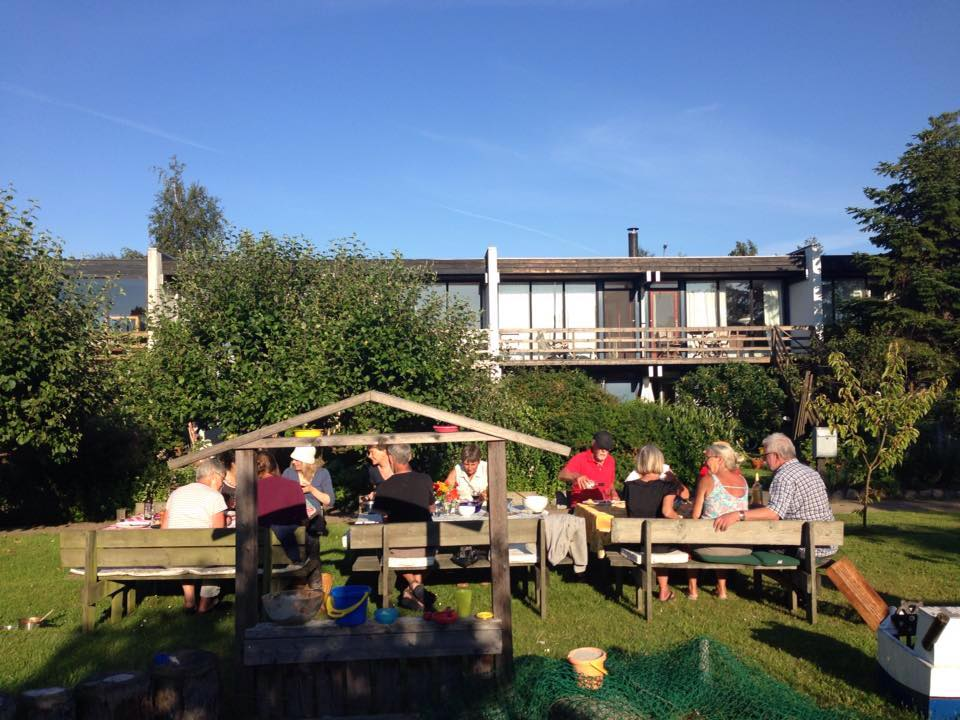
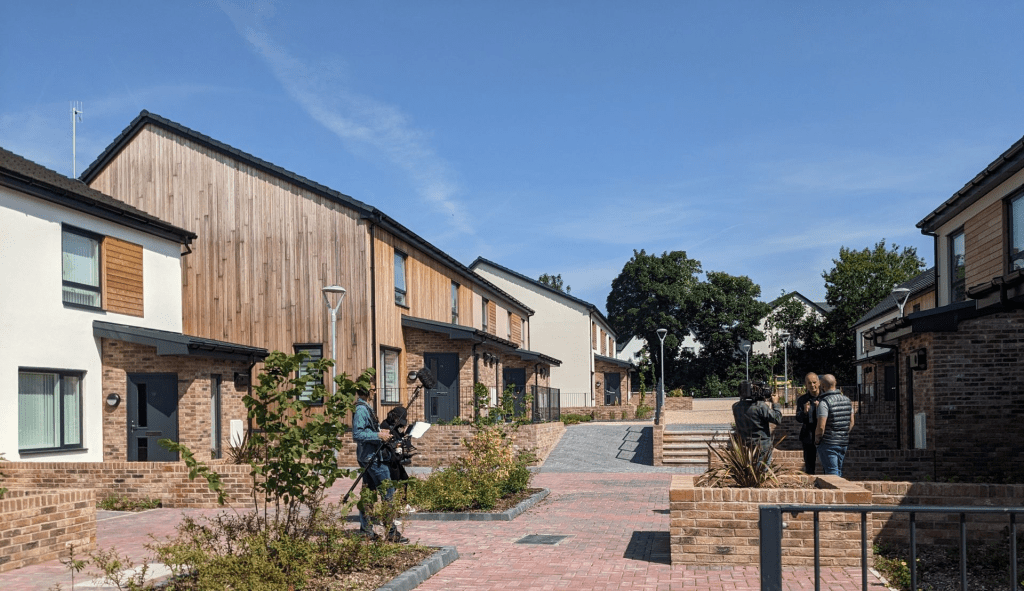
Children are playing in a shared courtyard while a few adults cook dinner together in a large communal kitchen. Someone is watering vegetables in the community garden. Another neighbor is helping fix a bike in the workshop. Later that evening, several households gather around a long table to share a meal.
This isn’t a vacation resort or a summer camp. It’s cohousing.
A Different Way to Live
Cohousing is a housing model designed to bring people together while still giving them private space. Each household has its own home—complete with its own kitchen, living space, and front door. But the community also includes shared areas like gardens, playgrounds, kitchens, and gathering rooms.
The idea is simple: make it easier for neighbors to know each other.
Modern cohousing began in Denmark in the late 1960s, when a group of families wondered why their neighborhoods felt so disconnected. They designed housing communities that prioritized interaction—homes arranged around shared spaces instead of isolated lots.
The result was something closer to a village than a typical suburb.
Life Inside a Cohousing Community
In many cohousing communities, residents choose to share meals several times a week. One household might cook for everyone on Monday, another on Wednesday. Instead of cooking every night, people rotate the responsibility.
Small moments of cooperation happen all the time.
Someone might watch a neighbor’s child for an hour. Another person might lend tools for a weekend project. Need help moving furniture? There’s usually someone nearby who’s happy to help.
These interactions happen naturally because the environment encourages them. Walkways replace busy streets. Shared courtyards invite people to gather. Community spaces are designed to make spontaneous conversations easy.
Why People Are Choosing Cohousing
For many people, the biggest appeal is connection.
Modern life can be surprisingly isolating. Even in crowded cities, it’s possible to live next door to someone for years without knowing their name. Cohousing offers an alternative—one where relationships are built into the design of the neighborhood.
It also has practical benefits. Residents often share tools, childcare, gardens, and even cars. This can reduce costs and make daily life easier.
Many communities also focus on sustainability, using energy-efficient buildings, shared resources, and community gardens.

Why Cohousing Is Growing in Vancouver
Several factors make the model attractive in this city:
- High housing costs encourage shared resources and smaller private units
- Desire for community and social connection in dense urban living
- Strong interest in sustainable housing and shared infrastructure
- Multigenerational living and support networks for families and seniors
There are currently multiple completed projects and many more in development across British Columbia, including Vancouver, North Vancouver, and nearby communities.
The Challenges
Of course, living closely with others isn’t always easy.
Decisions about shared spaces or community rules usually happen through group discussions, which can take time. It also requires communication and willingness to compromise.
Cohousing works best when people actively participate and respect each other’s needs for both connection and privacy.
Could This Be the Future of Housing?
As housing costs rise and more people search for meaningful community, cohousing is gaining attention around the world. New communities are being developed in cities and rural areas alike.
For some people, it offers something that many modern neighborhoods lack: a genuine sense of belonging.
Because at the end of the day, housing isn’t just about buildings.
It’s about the people who live inside them—and the communities they create together
History of Co housing
Pre-1900s – Communal living traditions
Many cultures live in cooperative or shared housing arrangements. Communities such as the Shakers and the Oneida Community experiment with intentional communal living.
1967 – The idea emerges in Denmark
Danish architect Jan Gudmand-Høyer publishes an article criticizing isolated suburban living and proposing a more community-oriented housing model.
Late 1960s – Public discussion begins
Journalist Bodil Graae publishes the influential article “Children Should Have One Hundred Parents,” encouraging families to rethink how communities are organized.
1972 – First modern cohousing community
Sættedammen opens near Copenhagen, becoming the first modern cohousing development.
1988 – Cohousing introduced to North America
Architects Kathryn McCamant and Charles Durrett publish the book
Cohousing: A Contemporary Approach to Housing Ourselves.
1991 – First U.S. cohousing community
Muir Commons opens in Davis, California.
2000s–Present – Global growth
Cohousing expands across North America, Europe, and Australia, with many communities emphasizing sustainability, shared resources, and multigenerational living.
Dan Uhrenholt with the help of AI
 SilverHubLiving
Leave a comment